Our Story
How Sheepcamp started
How can a Diné family continue caring for sheep, maintaining a relationship with ancestral land, and earning a living when work and education often take family members away from home?
Generations on the Land
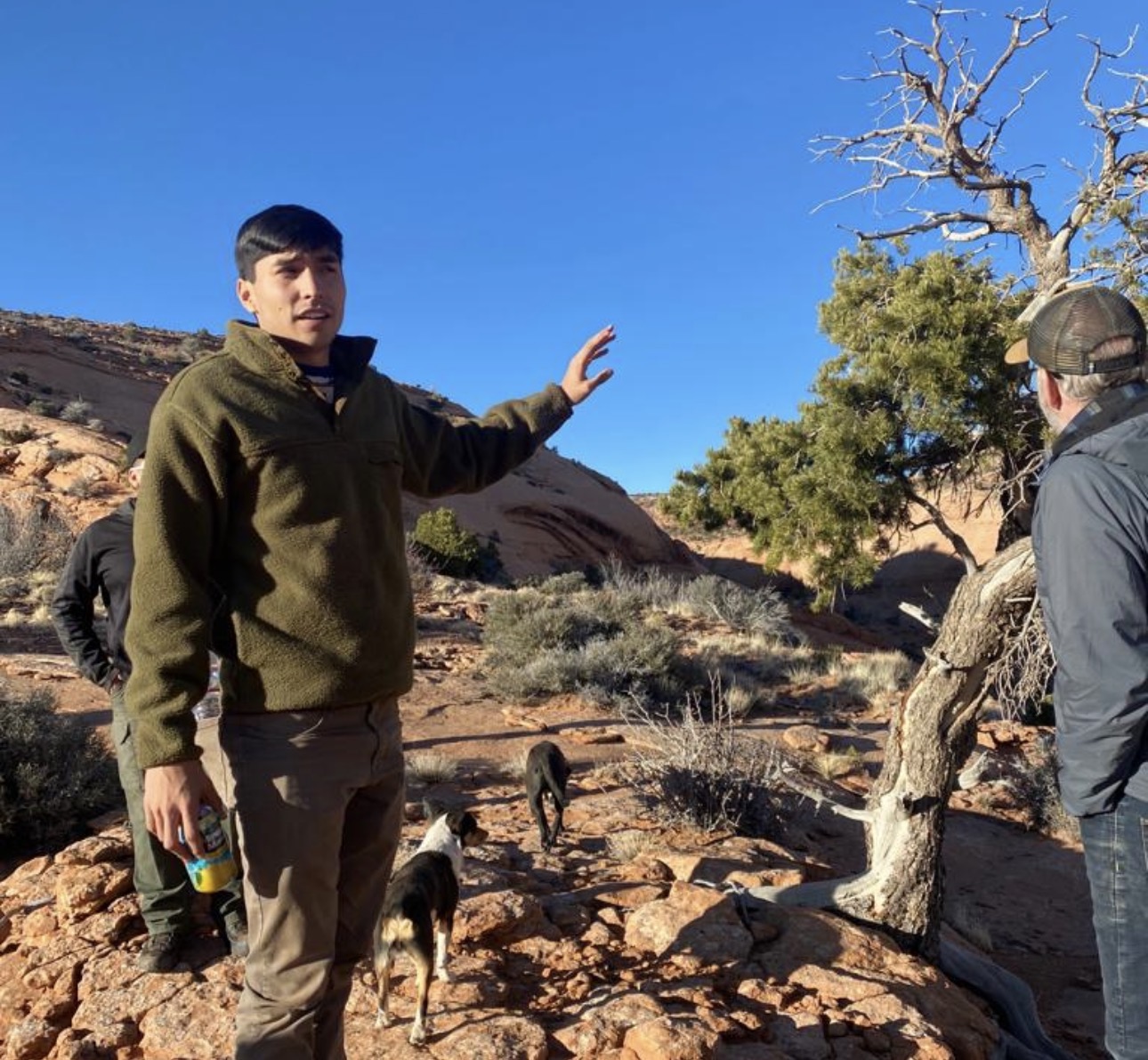
This land has been in the family for generations. Tim spent his childhood here with cousins and friends, hauling water, helping with the herd, and learning the rhythm of a place where the work does not pause.
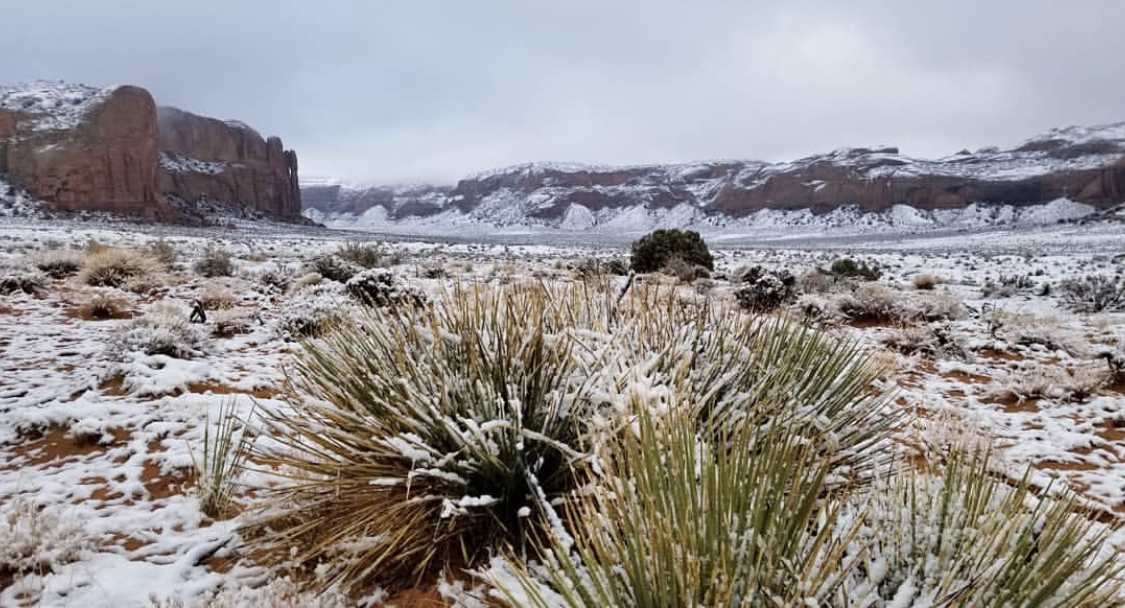
Sheep set that rhythm. In winter the herd moves into the canyons, where the rock holds warmth and offers shelter. In summer they move up to the mountain country, roughly twenty degrees cooler, with better feed and water. Those moves take trailers, fencing, time, and family.
The camp has also always been a place where people from different backgrounds sat down together. Tim's parents met and built a life across those differences, and in 2025 Tim married Ann, who grew up in Philadelphia, on the rim above the summer country. Guests who have visited over the past several years became part of that same pattern.
His grandmother Ruth's legacy is the reason any of this continues. Sheepcamp is an attempt to keep the land in use, keep the sheep cared for, and keep people connected to it.
Family history
The Benally family story
Sheepcamp did not begin as a tourism idea. It began with a family's continuing responsibility to land, sheep, relatives, and knowledge. The history below is told from Benally family oral history and placed alongside public records about the Long Walk, Hwéeldi, the return home, federal livestock reduction, the Civilian Conservation Corps–Indian Division, boarding-school-era disruption, uranium mining, and the work of keeping Diné agriculture viable today.
This history brings together Benally family oral history and public records about the broader Diné experience. Written federal records do not preserve every Diné name, movement, relationship, or contribution. Where a story comes from the family, we identify it as family oral history. Where a broader event is documented publicly, we link the source.
Chapter 1
Hwéeldi and the return home
Public-history context
Between 1863 and 1866, the United States military forced thousands of Diné from their homelands to Bosque Redondo at Fort Sumner, remembered in Diné history as Hwéeldi. The removal followed a scorched-earth campaign in which homes, crops, water sources, orchards, and livestock were destroyed. At Bosque Redondo, people endured hunger, disease, exposure, and death. Diné leaders negotiated the Treaty of 1868 on June 1, 1868, and the return home began later that month.
Documented public history
Sources 1, 2, 3, 4, 5Family account
Benally family oral history remembers Daghaa' Zhoní, whose name is translated within the family as “Beautiful Mustache,” as a medicine person originally from Wheatfields who lived in the Cove region. The family remembers that he avoided U.S. forces for a time, then surrendered after leading a starving group toward safety. They were encountered near present-day Shiprock and taken to Bosque Redondo.
Family accounts remember Daghaa' Zhoní as one of the Diné spokesmen who helped bring the final negotiations to completion.
Benally family oral history
Chapter 2
Daghaa' Zhoní, Naasbah, and a family rebuilt
According to family oral history, Daghaa' Zhoní married Naasbah, a woman from Cove whose parents were lost during the Bosque Redondo era. Together they cared for Naasbah's younger brother, Todik'ozhí, whose identity connects to Tim's paternal-grandfather clan. After the return, the family resettled in the Lukachukai and Round Rock region, where Diné families were rebuilding homes, flocks, relationships, and community after Hwéeldi. The family remembers this household as one led by medicine people and service to relatives.
Daghaa' Zhoní and Naasbah had two daughters. One carried her mother's name, Naasbah, throughout her life and did not replace it with an English name. The family remembers the younger Naasbah's relationship with Beeshbewoii, an earlier family ancestor known as the original “Goldtooth.” The exact sequence of marriages and parentage involving the younger Naasbah, Beeshbewoii, asdzaa Kinlichiinii, and the two men later known as Goldtooth Begay remains subject to family confirmation.
Benally family oral history
Chapter 3
Beeshbewoii and the Goldtooth name
Family oral history remembers Beeshbewoii as a medicine person from the greater Tsédaalzhá region, an older place-name associated by the family with the jagged rock walls extending from Sweetwater toward the north side of Lukachukai. The family says he did not surrender to Kit Carson and remained in the homeland through the Long Walk era. His name, translated by the family as “metal tooth” or remembered in English as “Goldtooth,” is connected in family accounts to a golden, metallic-looking plant he used in healing.
After the death of an earlier wife, the family remembers Beeshbewoii's marriages as joining several family lines. One later wife was asdzaa Kinlichiinii, translated within the family as “Lady Red House,” from Round Rock. The family remembers two sons who carried the English name Goldtooth Begay, distinguished within the family as Goldtooth Begay No. 1 and Goldtooth Begay No. 2.
Benally family oral history
Chapter 4
John Billy, healing, ministry, and the mines
Family account
Goldtooth Begay No. 1's line continued through John Billy, remembered as Edgar Benally's father. John Billy was trained as a medicine person and later became a Christian pastor. Like many men in the region, he also worked as a uranium miner while continuing to herd sheep and support his family. The family remembers that he developed serious lung problems and died young. They suspect direct uranium exposure contributed to his illness and early death.
Benally family oral history
Public-history context
Uranium mining reshaped the Cove and Lukachukai region beginning in the late 1940s. The U.S. Environmental Protection Agency reports that approximately 32 abandoned uranium mines are located in the Cove and Lukachukai chapters and that the Cove Wash watershed contains about 50 abandoned mine sites. More than 500 abandoned uranium mines remain on or near the Navajo Nation. Studies of Navajo uranium miners have found increased risks of lung cancer and other respiratory disease associated with mining exposure.
Documented public history
Sources 6, 7, 8Chapter 5
Edgar Benally and a name carried forward
John Billy raised Edgar, who was also learning to become a healer before serving in the U.S. Army. The family remembers that Chinle Boarding School assigned him the name Edgar in reference to J. Edgar Hoover and marked an “E” on his forehead.
Benally family oral history
The family explains the Benally surname through Edgar's identification of himself as Beeshbewoii binalí, or “Beeshbewoii's grandchild.” Over time, binalí was recorded as Benally. This is this family's account of how Edgar received and carried the name, not a universal explanation of the Benally surname.
Benally family oral history
Chapter 6
Gíníbah, Ruth, and the road to Round Rock
Tim's grandmother was known in her family as Gíníbah, translated here as “Happiness.” She came from Sweetwater and was adopted by Goldtooth Begay No. 2. The family called him chii'yah iiłíní, or “Cook,” because he cooked for a road crew working between family farms and Round Rock during a New Deal conservation program. Public records confirm that the Indian Emergency Conservation Work program began in 1933 and became the Civilian Conservation Corps–Indian Division in 1937. The specific road, crew, and role described here come from Benally family oral history.
Gíníbah was recorded as Ruth at the hospital in Morenci, Arizona, when she gave birth to Victor. Edgar and Ruth later raised Victor, Arthur, and Vince. The three brothers and their relatives continue to care for Naasłah and the family's livestock and land.
Benally family oral history and current family records
Sources 10Chapter 7
Naasłah, the sheep, and a living responsibility
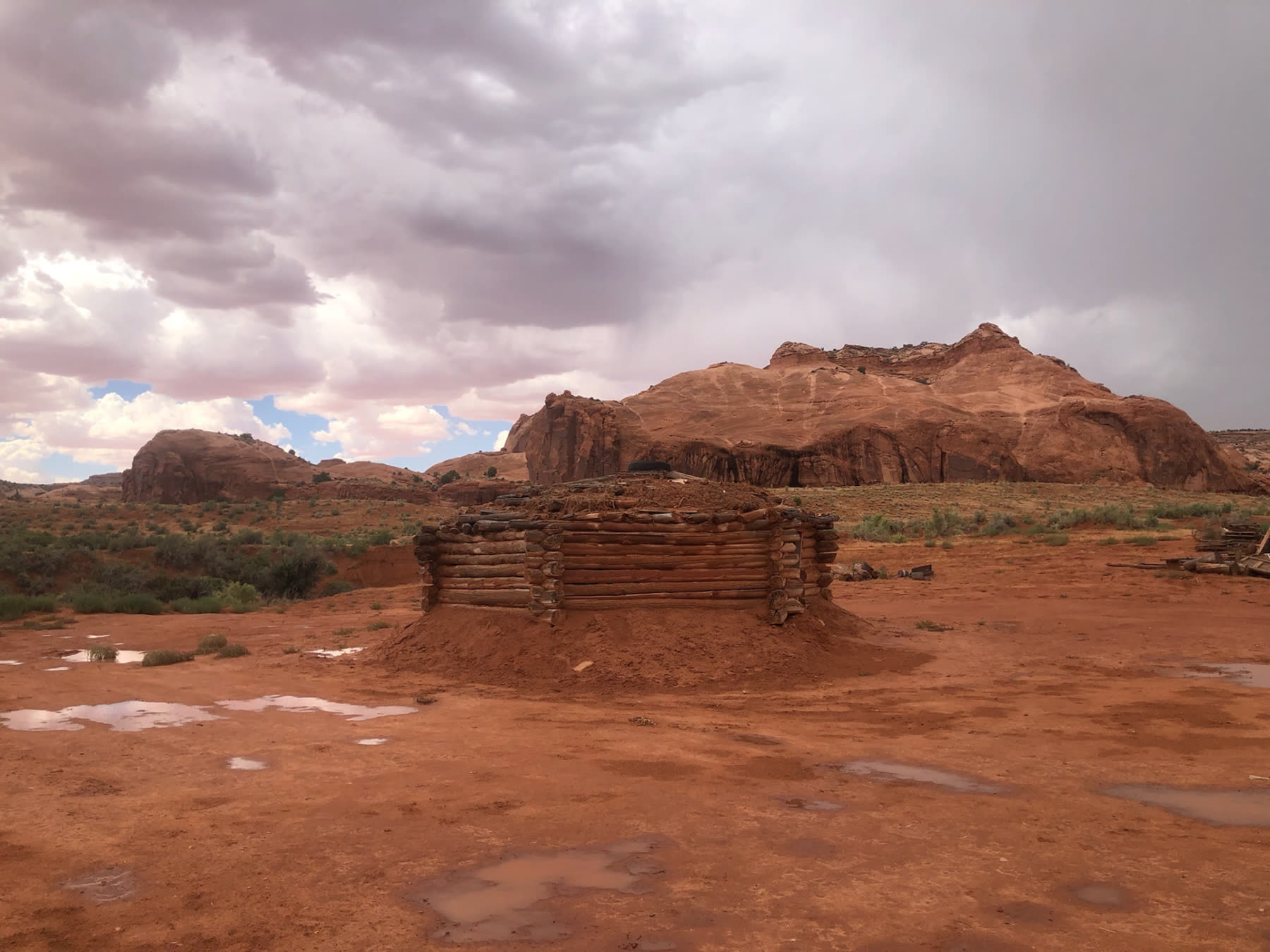
Before and after their time in Morenci, Edgar and Gíníbah built family life around Naasłah, translated within the family as “the canyon of study.” Its canyons, water, grazing areas, and natural places for corrals helped keep the sheep close and gave the family room to learn through daily work. Naasłah is a living family place, not an attraction or a publicly accessible destination, and we do not publish its location.
The family's sheep have supported food, wool, ceremonies, funerals, graduations, and relationships with neighbors. In this family's practice, an animal is often shared or given when another household is facing loss or marking an important moment. This is how this family does things, not a rule followed by every Diné family.
Benally family oral history and current family practice
Chapter 8
Federal policy and the economics of keeping a flock
Public-history context
The federal livestock-reduction programs of the 1930s sharply reduced Diné herds and damaged household income, food systems, and relationships with sheep. Later grazing-control systems continued to determine how many animals families could keep.
Documented public history
Sources 11, 13Family account
The Benally family understands its present grazing permit to allow 29 sheep. That is this family's current limit, not a Navajo Nation-wide cap.
A flock of that size rarely produces enough wool income to cover the work, water, feed, transportation, veterinary care, and time required to maintain it. The family has participated in Diné College land-grant and wool efforts and has received Merino and Rambouillet sheep intended to improve herd and market value. Even so, the family often gives livestock to relatives and neighbors during funerals, graduations, and other times of need. Sheepcamp is an effort to make continued stewardship economically possible without reducing the sheep, land, or family knowledge to products.
Benally family oral history and current family records
Sources 12Chapter 9
The uranium legacy did not end in 2005
The family continues to live with the health, land, and water consequences of uranium development in the Cove and Lukachukai region. In 2005, the Navajo Nation acted to prevent further uranium mining and processing while the effects of past mining continued, enacting the Diné Natural Resources Protection Act. Cleanup of abandoned mines and affected areas continues.
Documented public history
Sources 6, 7, 9Chapter 10
Why Sheepcamp exists now
Today, Victor, Arthur, Vince, Tim, and other relatives continue the work of caring for Naasłah, the flock, and one another. The pressures are practical: a small permitted flock, weak wool returns, the cost of hauling and caring for animals, distance from services, drought, contamination, and fewer relatives able to remain on the land full time.
Sheepcamp is one of the family's most serious efforts to keep this way of life viable. The goal is not to preserve the family as a display for visitors. The goal is to create enough support for relatives to continue living, working, teaching, and raising children on the land.
Tim and Ann are preparing to welcome a new generation of the Benally family in September 2026. They hope their son will know the people, place, work, and responsibilities that shaped those before him. Sheepcamp is part of making that future possible.
Benally family statement, 2026
This is not a finished history. It is a history still being lived.
Sources and story notes
Benally family oral history, carried by descendants and recorded for Sheepcamp by Tim Benally, 2026. Names, translations, relationships, place descriptions, and family experiences remain subject to family review.
- 1.The Long Walk · National Museum of the American Indian · opens in a new tab
- 2.Bosque Redondo · National Museum of the American Indian · opens in a new tab
- 3.Navajo Treaty of 1868 · National Museum of the American Indian · opens in a new tab
- 4.Returning Home · National Museum of the American Indian · opens in a new tab
- 5.Bosque Redondo Memorial at Fort Sumner · New Mexico Historic Sites · opens in a new tab
- 6.Navajo Nation Abandoned Uranium Mines Cleanup · U.S. Environmental Protection Agency · opens in a new tab
- 7.Lukachukai Mountains Mining District Tronox Mines · U.S. Environmental Protection Agency · opens in a new tab
- 8.Mortality among Navajo uranium miners · Centers for Disease Control and Prevention · opens in a new tab
- 9.Executive Order No. 04-2023, on uranium impacts and the Diné Natural Resources Protection Act of 2005 · Office of the President of the Navajo Nation · opens in a new tab
- 10.Records of the Civilian Conservation Corps–Indian Division · National Archives · opens in a new tab
- 11.Land Reform in the Navajo Nation, including discussion of livestock reduction · Diné Policy Institute at Diné College · opens in a new tab
- 12.Northern Navajo Wool & Mohair Buy, June 2025 · Diné College Land Grant Office · opens in a new tab
- 13.Navajo Nation Grazing Regulations · Navajo Nation Department of Agriculture · opens in a new tab
Experience Behind Sheepcamp
Years of hosting, written down plainly
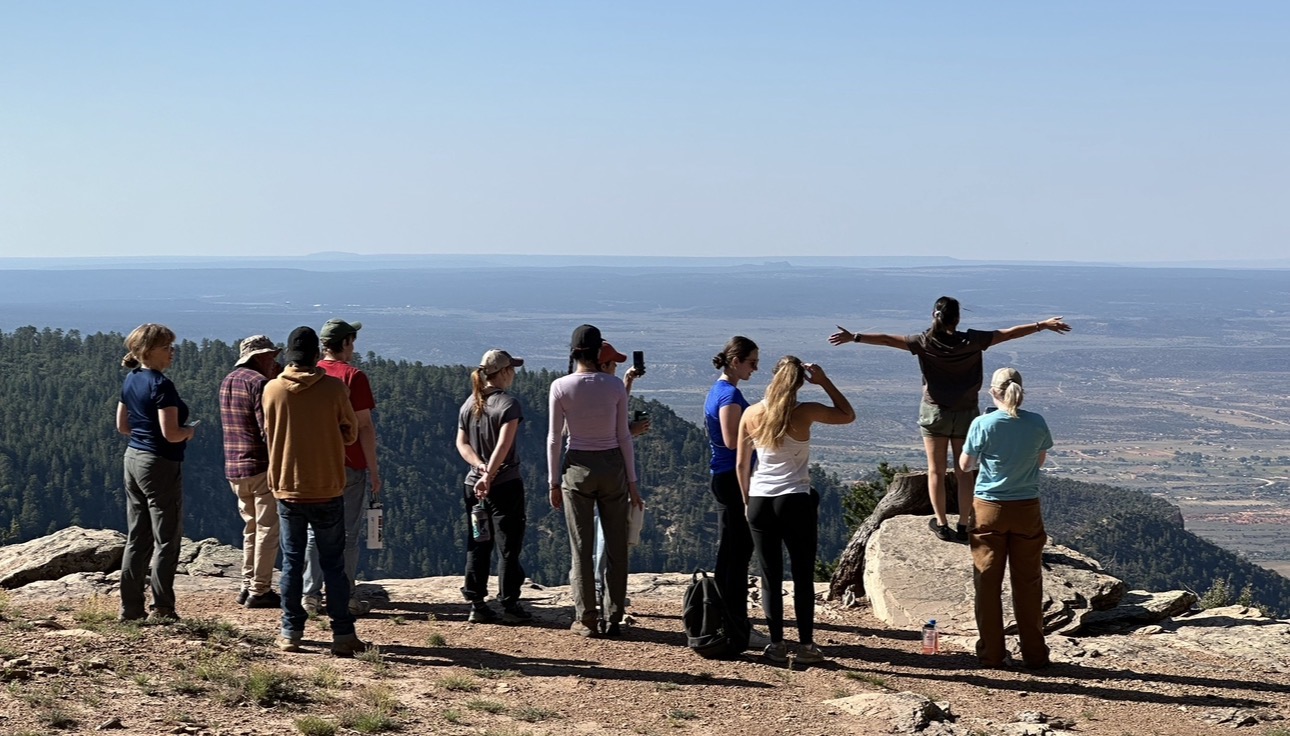
Our family hosted educational groups here long before Navajo Sheepcamp LLC existed.
2021 – 2026
Recurring university visits
Recurring three-day visits hosted for a university land-based learning course, with some semesters skipped depending on family and land conditions.
2023
Graduate students and faculty
Hosted six graduate students and eight faculty members from a university program.
Summer 2023
National Park Service interns
Hosted a two-day visit for Grand Canyon National Park Service interns.
2026
Private pilot visit
A Saturday-to-Monday visit for two adult guests. We used it to test logistics, pacing, and what guests need to know beforehand.
September 2026
University visit in planning
Eight university students and four staff, planned together with their faculty.
What we are building next
Four-day private weekends and university-led programs
Private guests come Friday through Monday, with one or two nights camping at Sheepcamp and the rest of the time at other places across the Navajo Nation. University and group programs are designed around each program's goals and available time.
Institutions named here are working relationships, not sponsors or endorsers of Navajo Sheepcamp LLC.
Long-term vision
Looking Ahead
Our first responsibility is to build a family business that operates responsibly and supports the people caring for the land and sheep. In time, we hope to establish a separate foundation supporting Diné youth reconnection trips, shepherding education, scholarships, language learning, and cultural preservation.
This foundation has not yet been established. Sheepcamp is not currently soliciting tax-deductible donations.
Sheepcamp begins as a family-owned business. We are planning a small number of visits for 2027.